
That's normal — most families finalise the exact style at the fitting stage after seeing a few fabric and drape options in person or over video call, rather than deciding everything upfront.
Shirdi Groom Wedding Safa | Traditional Handcrafted Wedding Turbans
Get Pricing & Catalog on WhatsApp
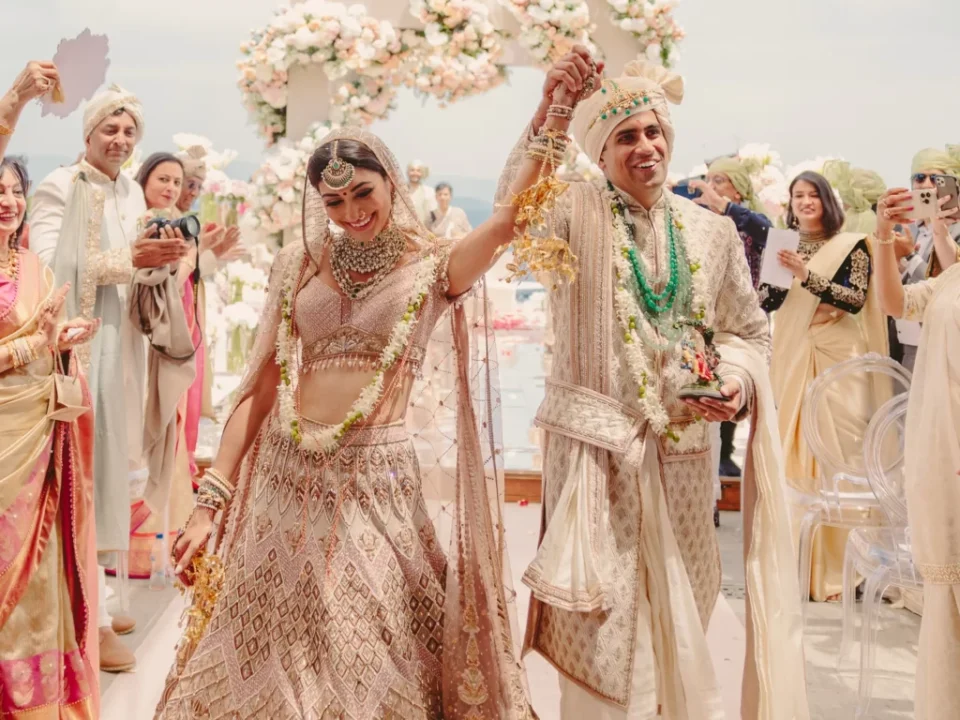
Shirdi is a destination-wedding town where resort and lawn weddings still call for a proper safa, delivered and tied on-site rather than assumed unnecessary, and Safawala’s approach to groom safa styling here reflects that: a proper fitting, fabric chosen to suit the event, and a trained stylist who ties it on the day rather than leaving the groom to manage it himself.
For larger Shirdi weddings, groom safa styling can be scaled to cover the full wedding party in one coordinated order, keeping the look consistent across the groom, father, and close relatives rather than booked separately.
Visit Our Shirdi Studio
For families short on time, Safawala can compress the Shirdi process into a single week — fitting, fabric confirmation, and delivery — though a slightly longer runway usually makes for a better final fit.
On the Wedding Day
Once the safa is tied on the wedding morning in Shirdi, it’s built to hold through the full event — the ceremony, the photographs, and the reception — without needing to be re-tied partway through.
What Makes Safawala Different
For Shirdi weddings with a tight schedule, Safawala’s team plans backward from the ceremony time, working out exactly when the stylist needs to arrive rather than treating tying as an afterthought.
Local Expertise in Shirdi
Safawala doesn’t treat Shirdi as a one-off market — repeat bookings and referrals from past Shirdi weddings are common, and the team keeps informal notes on what’s worked well for families here, from fabric choices to timing preferences.
Why Shirdi Families Trust Us
Consistency is what most Shirdi families end up valuing most in hindsight: the same standard of fitting, fabric, and tying applied whether it’s a modest family function or a large multi-day wedding.
Areas We Cover Near Shirdi
Beyond Shirdi itself, the same Safawala team regularly handles groom safa styling for weddings in Pune, Mumbai, and Panvel, so a destination or multi-venue celebration isn’t a logistics problem.
What to Keep in Mind
It helps to confirm the outfit underneath — sherwani, kurta, or bandhgala — before the fitting, since the tying style and fabric pairing can shift depending on what’s worn with the safa.
Our Simple Booking Process
Pickup after a Shirdi wedding is arranged as part of the original booking, so there’s nothing extra for the family to organise once the celebrations wind down.
For families planning groom safa styling in Shirdi, the reassurance Safawala offers isn’t a discount or a rushed turnaround — it’s a fitting that actually fits and a stylist who turns up.
Frequently Asked Questions About Groom Safa Styling in Shirdi
Is there a minimum number of turbans required for a group booking?
No strict minimum — bookings range from a single groom's safa to a full wedding party. Group orders are simply coordinated as one booking rather than several separate ones.
Are there different safa styles for different communities or regions?
Yes — styles vary by community and region, and Safawala's stylists working in Shirdi are familiar with the local preferences, whether that's a Rajputi drape, a Gujarati style, or a Marathi pagdi.
Can the fitting be done without visiting a studio in Shirdi?
Yes. Many families complete the fitting over a WhatsApp video call, especially when they're travelling in from another city for the wedding. A final in-person adjustment can still be arranged closer to the date if needed.
How do I get an approximate price for groom safa styling in Shirdi?
The quickest way is a WhatsApp message with the wedding date, venue, and roughly how many people need turbans — Safawala shares relevant catalogue options and pricing based on that.
What if the wedding venue changes after the booking is confirmed?
Just let the team know as soon as the new venue is confirmed — delivery and stylist scheduling are updated accordingly without affecting the rest of the booking.
Can out-of-town relatives get a turban tied if they're only arriving the morning of the wedding?
This is possible but needs to be flagged in advance so the stylist's schedule accounts for it — arriving without notice on a packed wedding morning makes it harder to guarantee a slot.
Is it possible to book turbans for the whole wedding party, not just the groom?
Yes — group bookings covering the groom, father, brothers, and other close relatives are handled as one coordinated order, which also helps keep the look consistent across the wedding party in photographs.