
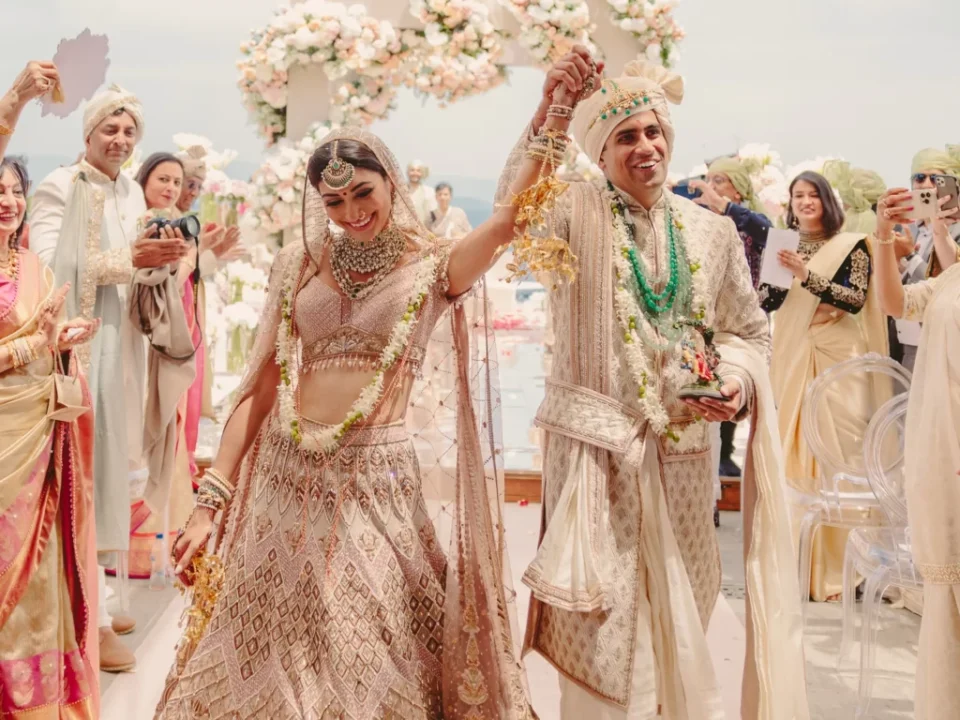
Silk, brocade, and cotton-silk blends are the most common choices, selected based on the season, the outfit underneath, and whether the event is indoors or outdoors.
Morbi Guest & Barati Wedding Safa | Traditional Handcrafted Wedding Turbans
Get Pricing & Catalog on WhatsApp
Most grooms in Morbi only need to think about their safa twice — once at the fitting, once on the day. Safawala’s guest and barati styling is structured to make that possible, with sourcing and tying handled entirely behind the scenes.
For larger Morbi weddings, guest and barati styling can be scaled to cover the full wedding party in one coordinated order, keeping the look consistent across the groom, father, and close relatives rather than booked separately.
Visit Our Morbi Studio
A lot of Morbi bookings come from referrals — one family’s wedding photos leading to the next family’s inquiry. Safawala’s process stays the same regardless: fitting, fabric, tying, all handled by one team.
On the Wedding Day
The tying itself takes longer than most people expect the first time they see it done properly — pleating, securing, and shaping the safa so it holds through a full day of photographs and dancing.
What Makes Safawala Different
Families who’ve dealt with a same-day rental counter before usually notice the difference immediately with Safawala’s Morbi service — the fitting happens well ahead of time, not in a rush an hour before the ceremony.
Local Expertise in Morbi
Weddings in Morbi follow their own rhythm — certain weeks get booked out faster than others, certain venues have specific space constraints for the tying session. Safawala’s team plans around this local pattern rather than treating every Morbi booking as an isolated, unfamiliar request.
Why Morbi Families Trust Us
Trust, for most Morbi families, comes down to a stylist who actually shows up on time and a safa that looks like it was made for the groom wearing it — not a discount or a flashy catalogue. Safawala’s Morbi bookings are built around meeting exactly that bar, order after order.
Areas We Cover Near Morbi
Beyond Morbi itself, the same Safawala team regularly handles guest and barati styling for weddings in Rajkot, Jamnagar, and Gondal, so a destination or multi-venue celebration isn’t a logistics problem.
What to Keep in Mind
If the wedding involves multiple functions in Morbi, it’s worth deciding early whether the same safa is reused or a different one is needed for each event, since that changes what gets planned and packed.
Our Simple Booking Process
For Morbi weddings booked well in advance, Safawala schedules the fitting appointment about two weeks out, which tends to give the most reliable fit on the day itself.
For every Morbi family, the process ends the same way it started — a stylist who shows up, a safa that fits, and one less thing to manage during an already busy wedding week.
Frequently Asked Questions About Guest And Barati Styling in Morbi
Is it possible to book turbans for the whole wedding party, not just the groom?
Yes — group bookings covering the groom, father, brothers, and other close relatives are handled as one coordinated order, which also helps keep the look consistent across the wedding party in photographs.
Can out-of-town relatives get a turban tied if they're only arriving the morning of the wedding?
This is possible but needs to be flagged in advance so the stylist's schedule accounts for it — arriving without notice on a packed wedding morning makes it harder to guarantee a slot.
How do I know what color or style suits the wedding outfit?
This is usually discussed at the fitting stage, where the stylist can see the outfit or photos of it and recommend a fabric and color that complements it rather than clashes.
What if two events on the same day need different turban styles?
This is planned for at the fitting stage — if a family needs a different style for, say, the haldi versus the main ceremony, that's factored into the booking rather than assumed to be one style throughout.
Do you offer trial fittings before the actual wedding-week fitting?
A single proper fitting is usually enough, done about one to two weeks before the event. A second check happens on the wedding morning itself as a final adjustment rather than a full separate trial.
What if the wedding venue changes after the booking is confirmed?
Just let the team know as soon as the new venue is confirmed — delivery and stylist scheduling are updated accordingly without affecting the rest of the booking.
What if I'm not sure exactly what style I want yet?
That's normal — most families finalise the exact style at the fitting stage after seeing a few fabric and drape options in person or over video call, rather than deciding everything upfront.